
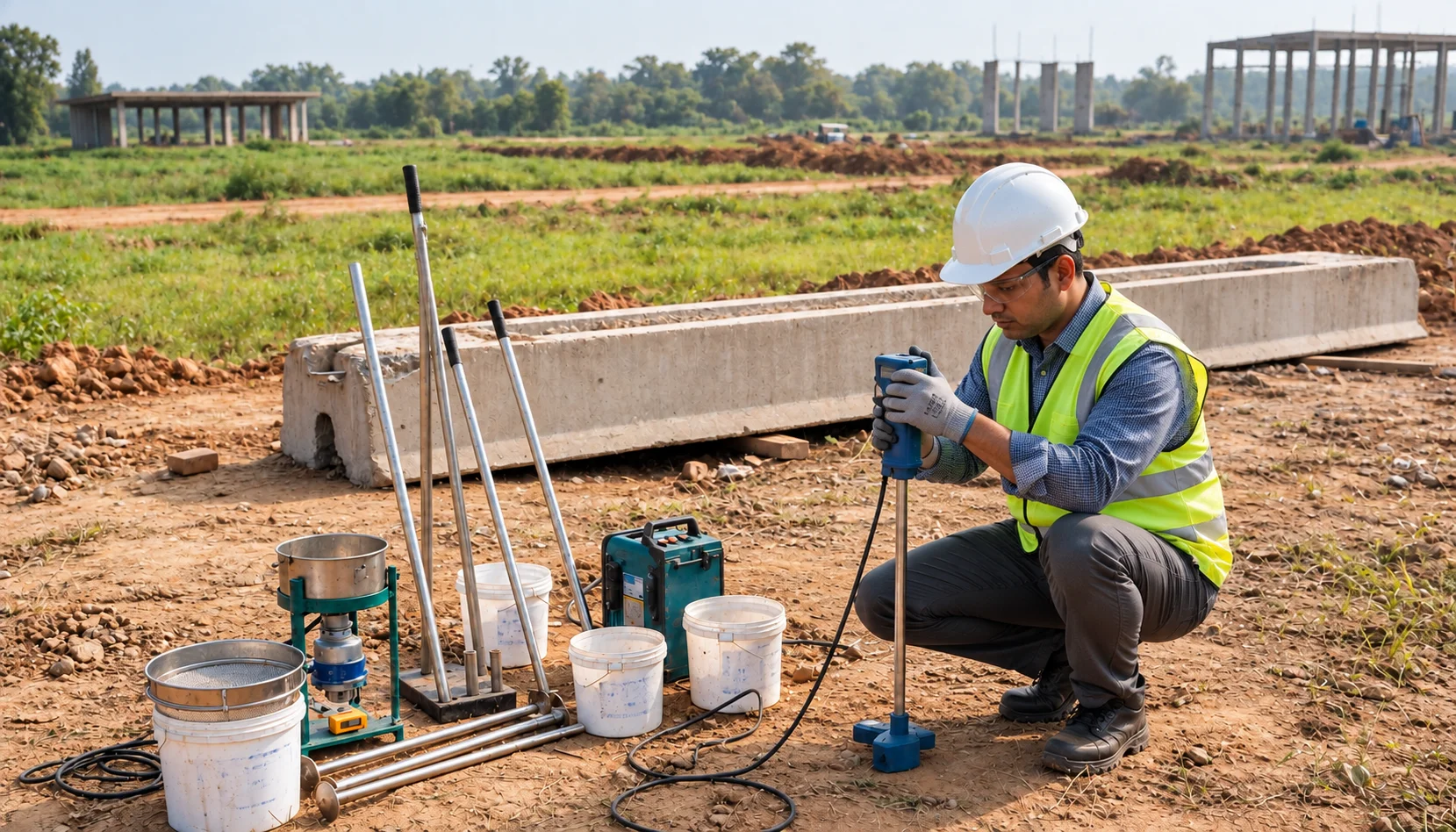
Building a strong industrial facility takes more than quality materials and skilled workers. Reliable ground data forms the true foundation of every successful project. In this fast-growing hub, professional Soil Testing Pune services reveal risks before construction begins.
Engineers must check bearing capacity, groundwater levels, and settlement risks to protect structural strength. Without accurate analysis, developers face major hazards during excavation and heavy equipment installation. Precise soil testing pune methods help teams find hidden geological challenges early in design.
These investigations protect long-term investments and improve worker safety. Proactive site assessment is the best way to prevent costly structural failures and project delays. Thorough analysis today supports a safer, more stable industrial future.
Professional soil testing for construction protects industrial buildings from structural failure. In fast-growing Pune, site geology is a key safety concern, not only a technical requirement. Without accurate data, developers may build on unstable ground that cannot support heavy industrial loads.
Structural stability depends on soil bearing a building’s weight. If bearing capacity is too low, the structure may experience excessive settlement, causing cracks in walls and foundations. Engineers study soil density and composition to confirm the ground can support industrial machinery.
Ignoring soil properties raises the risk of differential settlement. This happens when foundation sections sink at different rates, weakening the facility and causing costly repairs or total failure.
Unverified ground conditions can severely damage slabs, foundations, and utility systems. Heavy equipment needs a level, stable base for safe operation. If soil below a concrete slab is loose or poorly compacted, machinery weight may make it buckle or collapse.
Shifting soil can damage underground utility lines. Sudden ground movement may rupture pipes or sever electrical conduits, causing leaks or fire hazards. Proper soil testing for construction helps find these risks before they cause expensive operational downtime.
Subsurface data plays a vital role in site safety. Groundwater can reduce soil’s effective stress, making excavations more likely to collapse. Thorough investigations help contractors choose shoring and dewatering measures that protect workers.
Asset protection covers more than the building frame; it also includes the industrial site’s long-term condition. The table below shows how soil risks can affect industrial infrastructure:
|
Soil Condition
|
Primary Risk
|
Impact on Asset
|
|---|---|---|
Ultimately, investing in accurate soil data best protects workers and extends industrial asset life. By prioritizing soil testing for construction, Pune stakeholders can reduce risks and build with confidence.
Hidden geological hazards can weaken even ambitious engineering designs when teams overlook them. A professional soil investigation pune provides data to identify these dangers before construction starts. Engineers can study subsurface layers, prevent major failures, and extend industrial infrastructure’s life.
Many industrial sites have compressible soil layers that cannot support heavy machinery or large structures. When pressure deforms these soils, the building may experience excessive settlement. This movement can cause structural cracks, misaligned equipment, and costly operational downtime.
Some soils react badly to moisture changes or structural loads. Expansive clays swell when wet and shrink when dry, making foundations unstable. Loose or collapsible deposits may suddenly lose volume, causing ground to sink under a facility’s weight.
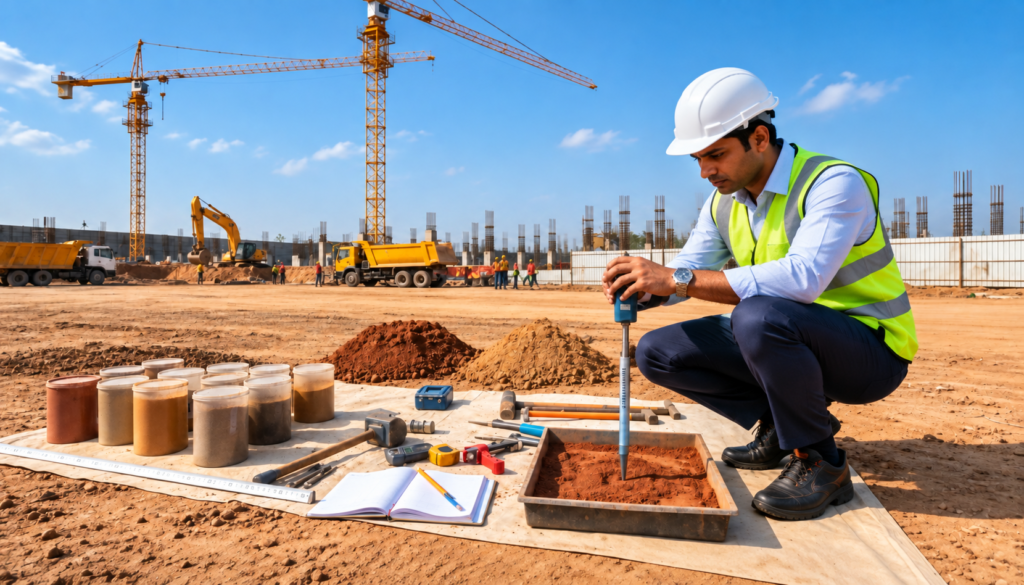
High groundwater levels create major challenges for deep excavations and basement construction. Poor drainage can build hydrostatic pressure, threatening retaining walls and floor slabs. Site analysis finds these risks early and guides dewatering and waterproofing plans.
Industrial sites often contain old pollutants that threaten health and the environment. Finding these contaminants protects workers and supports compliance with local safety regulations. A thorough soil investigation pune ensures teams manage or remove hazardous materials before construction begins.
The Pune region needs careful attention to seismic activity and soil density. During strong shaking, loose, saturated granular soils can lose strength through liquefaction. This process can make buildings tilt or sink, so checking soil density is vital for safety.
|
Risk Factor
|
Primary Impact
|
Mitigation Strategy
|
|---|---|---|
Ultimately, proactive testing reduces these risks through informed engineering decisions. By prioritizing a detailed soil investigation pune, project managers can protect assets from natural and human-made ground hazards.
Construction soil testing Pune provides key data for reducing risks before work begins. Engineers combine several methods to build a dependable ground model for each development stage. This process keeps structural designs aligned with the site’s actual ground conditions.
The process starts with a desk study of geological maps and historical land-use data. Next, experts inspect surface features and look for drainage problems or unstable slopes. These steps guide borehole placement and capture the most important underground information.
Construction soil testing Pune uses field tests to capture real-time data about soil behavior under load. These tests offer immediate insights into ground strength at different depths.
Standard Penetration Tests (SPT) use recorded hammer blows to estimate soil resistance and density. By contrast, Cone Penetration Tests (CPT) provide continuous resistance and pore-pressure data. Together, these methods create a detailed view of the soil profile.
Plate load tests simulate foundation loads to measure soil bearing capacity. Vane shear tests help assess soft, cohesive soil strength. In-situ density tests check ground compaction against strict safety standards.
The construction soil testing Pune process includes laboratory analysis after field samples are collected. This phase shows how soil may behave under long-term industrial loads.
Grain size analysis classifies soil, while Atterberg limits show plasticity and moisture sensitivity in fine-grained materials. Compaction testing finds the moisture level needed for maximum soil density. These metrics are essential for preventing future structural movement.
Direct shear and triaxial tests measure soil strength and friction angles. Consolidation testing measures possible settlement over time, which matters for heavy industrial machinery. These tests help foundation designs meet the demanding requirements of the facility.
A thorough geotechnical investigation Pune gives engineers a clear plan for resilient industrial foundations. Soil-layer analysis helps engineers choose efficient ways to transfer structural loads into the ground.
The choice between shallow footings and deep piles depends on the depth of competent soil strata. Shallow foundations work when upper soil layers have enough strength to support building loads.
If surface soil is weak or compressible, deep foundation systems become necessary. They transfer loads to deeper, more stable rock or dense soil layers, preventing structural failure.
Engineers use field test data to calculate the site’s ultimate bearing capacity. This value shows whether soil can support the structure’s weight without shear failure.
Engineers also estimate total and differential settlement. Strict settlement limits help keep the building functional and safe throughout its operational lifespan.
Industrial facilities often house heavy machinery that creates significant dynamic loads. Foundation designs must account for vibrations, preventing soil liquefaction or excessive movement.
Specialized bases help dampen vibrations and spread forces evenly. This approach protects equipment and the facility’s surrounding structural integrity.
When natural soil conditions are poor, a geotechnical investigation Pune may recommend ground improvement, such as stone columns or soil stabilization. These methods increase the existing ground’s density and strength.
Engineers may also design raft foundations to spread heavy loads across a larger area. They plan retaining structures to manage soil pressure and prevent slope instability around the site perimeter.
Differential settlement occurs when different parts of a structure sink at uneven rates. This can severely misalign sensitive industrial machinery and cause operational downtime.
Strict settlement control is vital for long-term facility reliability. Proper foundation design helps buildings and equipment settle uniformly, preserving industrial process precision.
|
Foundation Type
|
Best Soil Condition
|
Primary Benefit
|
|---|---|---|
Once ground breaking begins, soil analysis shifts from design to active risk control. Professional Soil Testing Pune services remain vital during construction. They confirm that site conditions match the initial geotechnical models. This oversight helps project managers avoid costly delays and structural failures.
Deep excavations for industrial foundations may expose soil layers that differ from predictions. Engineers must verify temporary shoring and bracing suit the soil types found on-site. Regular inspections ensure lateral earth pressure stays within support design limits.
Groundwater management poses a major challenge in many industrial zones. Unexpectedly high water levels can soften soil or cause catastrophic slope failure. Effective dewatering strategies need monitoring to prevent fines loss, which could weaken nearby structures.
Engineered fill quality supports the long-term performance of industrial floors and heavy machinery foundations. Compaction testing checks whether placed fill reaches the specified density before slabs or pavements are built. This creates a uniform subgrade and lowers future settlement risk.
Even thorough pre-construction surveys may miss ground problems that contractors later encounter. Finding these anomalies early helps protect site safety and project timelines. The following table lists common triggers for immediate investigation:
|
Condition
|
Potential Risk
|
Required Action
|
|---|---|---|
Additional soil testing pune becomes mandatory when site conditions differ greatly from the original geotechnical report. If workers find weak layers, buried materials, or unstable slopes, construction should pause for formal design review. This proactive step protects the investment and all personnel on the industrial site.
.
Ground investigation supports physical stability and financial security in industrial projects. Data-driven findings help stakeholders manage complex site challenges with confidence. Reliable information guides each stage of a successful development.
Bureau of Indian Standards (BIS) compliance is mandatory for all industrial developments. Detailed reports from Soil Testing Pune provide evidence for regulatory audits and local municipal requirements. This documentation shows that each design choice follows national safety codes.
Finding subsurface risks early protects the project budget. If engineers find weak soil or high water tables before construction, they can change designs and avoid costly changes. Proactive planning avoids expensive foundation repairs caused by unexpected ground conditions.
Accurate site data helps project teams communicate clearly. Owners, engineers, and contractors can then make better choices about structural loads and materials. This clolaborative approach lowers accident risks and keeps everyone aligned with safety protocols.
Industrial structures face heavy stress from machinery and environmental factors. By studying soil composition, experts can reduce risks from uneven settlement and moisture damage. Long-term structural health depends on these early checks, which help prevent cracks and downtime.
Stored test reports preserve a record of the site’s original condition. During maintenance or expansion, engineers can compare current findings with historical data. Using Soil Testing Pune results throughout a building’s life helps teams address distress signs precisely and efficiently.
Reliable ground data supports every successful industrial project. Professional Soil Testing Pune helps developers find hidden risks, including weak bearing capacity, groundwater issues, and seismic vulnerabilities, before construction begins.
Accurate site analysis turns complex geological challenges into practical engineering solutions. Detailed field and laboratory results help project managers choose foundation systems that prevent costly structural failures. This proactive approach keeps heavy machinery stable and operational for decades.
Geotechnical insights protect human lives and capital assets throughout development. Quality assurance protocols use these findings to check fill materials and excavation safety during construction. Consistent monitoring and strict standards reduce rework and improve facility durability over time.
Contact certified geotechnical experts to schedule your next site assessment. Use Soil Testing Pune to support informed decisions and build a safer, more resilient industrial landscape for tomorrow.
Icon Turnkey Ventures LLP provides professional soil testing and geotechnical investigation services for industrial and construction projects in Pune and Pimpri-Chinchwad. Our services help assess soil conditions, bearing capacity, groundwater levels, and foundation requirements, supporting safe, stable, and reliable construction projects.
Soil testing pune provides the ground data needed for safe construction decisions. By identifying soil bearing capacity, groundwater levels, and settlement potential, engineers can design foundations for heavy industrial loads. This helps prevent catastrophic structural failures and equipment misalignment.
Soil testing for construction connects underground conditions with site safety planning. Understanding soil strength and moisture behavior helps contractors prevent foundation damage, slab cracking, and utility system failures. It also helps keep excavations stable for workers during construction.
Professional construction soil testing pune uses several in-situ methods. Standard Penetration Tests (SPT) estimate soil resistance, while Cone Penetration Tests (CPT) provide continuous resistance data. Other field tests include plate load tests and vane shear tests, which measure strength and density at the project site.
Data from a geotechnical investigation pune guides the choice between shallow foundations and deep pile systems. It helps engineers calculate precise settlement limits for heavy machinery. This ensures differential settlement does not affect vibration-sensitive industrial equipment.
Soil testing identifies groundwater ingress and soil instability before excavation begins. This supports proper planning for dewatering systems and temporary supports. It reduces slope failure risks and helps ensure fill materials reach the required compaction density for a stable subgrade, particularly for industrial construction projects in Pimpri-Chinchwad.
Yes, professional soil testing helps construction projects in Pimpri-Chinchwad follow applicable Indian Standard (IS) codes and local building regulations. The resulting reports provide documentation for quality assurance and project audits. They can also support long-term maintenance planning for industrial facilities.
Absolutely. Early soil testing can identify risks such as contaminated soil, weak or compressible layers, and groundwater conditions before construction begins. For industrial projects in Pimpri-Chinchwad, reliable soil data can help owners avoid costly redesigns, construction delays, and future foundation repairs. Proper testing supports predictable project timelines and contributes to the long-term reliability of the facility.

©2026 ICON Turnkey Ventures LLP | All Rights Reserved | Created & Crafted by Right Click Solution
This will close in 0 seconds
This will close in 0 seconds
This will close in 0 seconds
WhatsApp us