Starting a new facility needs careful money planning and a clear plan. People involved must deal with many market factors to make sure their money is well spent. Our industrial construction cost guide gives you the key numbers to handle these challenges well.
Recent data shows how crucial it is to budget right. In 2025, small new projects cost about $139 per square foot. Knowing these numbers helps managers spend money wisely, keeping up with the economy.
By using this method, you can keep your project on track from the start to the end. We provide the knowledge you need to stay within budget and meet high standards.
Key Takeaways
- Small ground-up projects averaged $139 per square foot in 2025.
- Accurate financial benchmarking is vital for successful facility development.
- Strategic planning helps align capital expenditure with market realities.
- Maintaining budget control ensures long-term project viability.
- Professional insights assist in navigating complex development phases.
Understanding the Industrial Construction Cost Guide

A clear project scope is key for any industrial project’s success. A detailed industrial construction cost guide helps set a roadmap from start to finish.
Defining the Scope of Industrial Projects
Industrial projects differ a lot in what they need and how big they are. A simple storage warehouse is much different from a high-tech manufacturing plant.
Starting with a clear scope helps avoid scope creep. When everyone knows what the project will be, it stays on track and avoids delays.
Importance of Accurate Financial Planning in India
The Indian market has its own challenges that need careful financial planning. Things like rules and changing costs can affect profits if not watched closely.
Companies need to be clear about their finances to avoid risks with big investments. A good industrial construction cost guide helps predict these issues before starting.
Strategic budgeting makes sure money is used well in all project stages. Being open about finances helps companies deal with India’s construction challenges confidently.
Key Factors Influencing Construction Costs in India
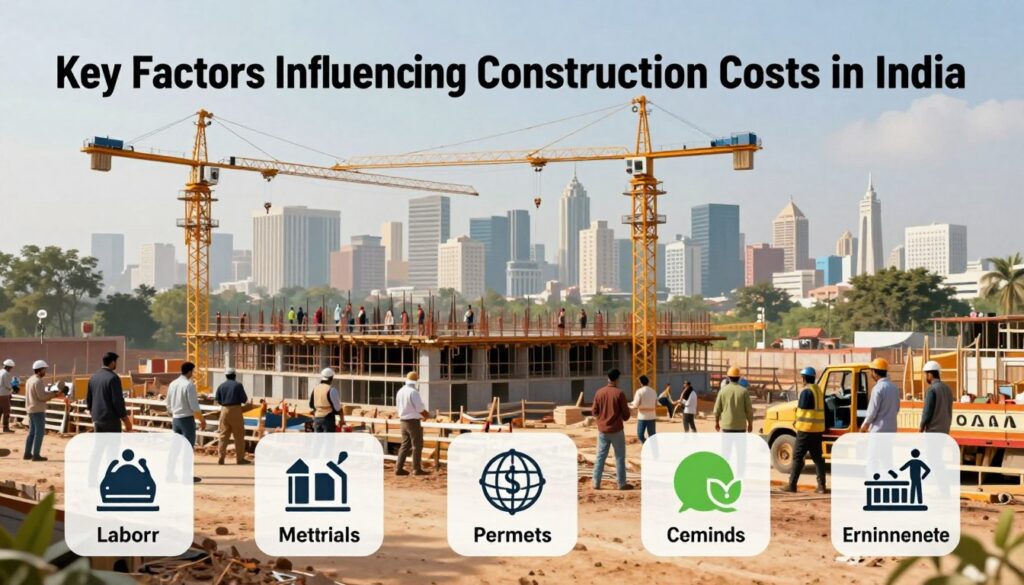
Understanding the main cost drivers is crucial for industrial development in India. Each project has its own financial hurdles that can change the budget. Knowing these factors early helps manage costs and avoid surprises.
Geographic Location and Land Acquisition Costs
The location of your project is key to your budget. Land prices differ a lot between areas. Choosing the right location wisely can save money in the long run, even if it costs more upfront.
“The bitterness of poor quality remains long after the sweetness of low price is forgotten.” — Benjamin Franklin
Regulatory Compliance and Approval Fees
Getting the right permits is a big part of the start-up costs. Dealing with local rules and fees can be complex. Working closely with local authorities can help avoid delays and save money.
Labor Availability and Wage Variations
Labor costs are going up due to a tight job market. Skilled workers are in demand, causing wages to change. Choosing reliable contractors helps manage these risks.
Material Sourcing and Logistics
Material costs can change, and logistics affect your budget. Buying materials locally can save on shipping. Improving your supply chain through smart planning is key to keeping costs down.
Detailed Industrial Building Cost Breakdown
Managing a facility’s finances needs a detailed industrial building cost breakdown. By breaking down costs into specific areas, managers can keep a tight grip on their budget. This is true from the start of the project to when it’s finished.
Structural and Civil Works Expenditure
The foundation and main structure are the biggest part of your budget. This includes earthwork, concrete footings, and the steel frame that shapes the building’s shape.
Special needs can raise the cost. For example, putting in reinforced floor slabs for heavy machinery can cost between $5 and $20 per square foot. These strong floors are key for lasting in busy factories.
Mechanical, Electrical, and Plumbing (MEP) Systems
MEP systems are the building’s lifeblood. They decide how well the building works and how efficient it is.
Good electrical and HVAC systems mean less trouble later. Even though they cost a lot at first, they save money and headaches in the long run.
Finishing and Interior Infrastructure
After the basic structure is done, the finishing touches make it ready for use. This includes walls, office setups, and safety systems like fire suppression.
Good planning inside boosts worker safety and productivity. Spending on quality materials here means a better, longer-lasting facility.
External Development and Landscaping
Outdoor work is often overlooked at first. This includes drainage, walls, gates, and roads for trucks.
A smart site design helps with traffic and security. Here’s a quick look at how these costs usually split in a project.
| Category | Budget Allocation | Complexity Level | Impact on Timeline |
|---|---|---|---|
| Structural Works | 45% | High | Critical |
| MEP Systems | 25% | Very High | Moderate |
| Finishing/Interior | 20% | Medium | Low |
| External/Landscaping | 10% | Low | Low |
Having a clear industrial building cost breakdown helps everyone make smart choices. By focusing on these four areas, your project stays on track financially.
Current Industrial Construction Cost Trends
Keeping up with industrial construction cost trends is key to staying ahead in today’s market. Business leaders face a world where economic changes affect their projects’ costs. By staying informed, they can make smart choices to protect their investments from market surprises.
Impact of Inflation on Raw Material Prices
The Indian construction sector is under pressure from changing commodity prices. Raw material costs are going up, but not evenly for all materials like steel, cement, and aggregates. Strategic procurement is more important than ever to handle these price jumps.
“Effective cost management in the current climate requires a shift from reactive budgeting to a data-driven approach that anticipates market volatility.”
Technological Advancements in Prefabricated Structures
Prefabricated structures offer a new way to tackle construction problems. By assembling parts off-site, projects can be finished faster and with less on-site labor. This approach helps keep costs steady by avoiding weather delays and labor shortages.
Sustainability and Green Building Cost Implications
Adding sustainability to industrial design requires weighing initial costs against long-term savings. Green materials might cost more upfront, but they save money over time. Companies are starting to see these costs as essential investments rather than just expenses.
| Trend Factor | Traditional Approach | Modern Approach |
|---|---|---|
| Material Sourcing | Local spot-buying | Long-term supply contracts |
| Construction Method | On-site labor intensive | Prefabricated modular units |
| Energy Efficiency | Standard compliance | Green building certification |
| Budgeting Focus | Fixed initial capital | Total cost of ownership |
Grasping these trends helps firms plan more confidently. As the industry changes, those who use technology and sustainable practices will likely do well financially. Adapting to these shifts is crucial for long-term success in India’s industrial sector.
Strategies for Effective Industrial Project Budgeting
Controlling finances is key to success in industrial projects in India. A proactive financial management approach helps leaders tackle big infrastructure challenges. By focusing on industrial project budgeting, teams can make sure money is used well throughout the project.
Conducting a Thorough Construction Cost Analysis
A detailed construction cost analysis is the first step to finding savings. It breaks down every expense to spot potential cost increases. This detailed look helps manage resources better and avoids financial surprises.
Regular checks on these estimates keep teams on track with financial goals. A thorough construction cost analysis gives the clarity needed for smart decisions. It also shields the project from market changes.
Managing Contingency Funds for Unforeseen Expenses
Every project faces unexpected challenges. It’s common to have a contingency fund for these surprises. Experts say this fund should be 10% of the total construction cost.
This fund acts as a safety net for sudden price increases or design changes. It keeps the project running smoothly without needing emergency funds. Managing these funds well is crucial for industrial project budgeting success.
Optimizing Procurement Processes
Improving how you get materials and services can save a lot of money. Building strong vendor relationships can get you better prices. This smart approach to buying helps avoid risks from unstable supply chains.
Having one place for all purchases can lead to better deals and faster delivery. When procurement is efficient, projects waste less and work better. This focus on smart buying is vital for staying financially healthy in tough markets.
Utilizing a Construction Cost Estimator for Accuracy
Getting the finances right in industrial projects is more than just using spreadsheets. A construction cost estimator helps project managers avoid risks early on. This way, your industrial construction cost guide stays a trusted guide from start to finish.
Benefits of Digital Estimation Tools
Today’s software gives a clear view of project costs. It automates calculations, cutting down on mistakes. With these tools, teams can make reports that show the latest market trends in India.
Integrating Historical Data for Better Projections
Digital tools improve forecasts by using data from past projects. This lets teams make more accurate financial plans. By using past costs, you can better predict future expenses on materials and labor.
Collaborating with Quantity Surveyors
Even with technology, people are key to success. Working with quantity surveyors adds valuable skills to budgeting. They make sure your industrial construction cost guide covers all the project’s details and rules. Their help keeps your project financially stable.
| Feature | Manual Estimation | Digital Estimation |
|---|---|---|
| Data Accuracy | Low (Prone to error) | High (Automated) |
| Historical Integration | Limited/Manual | Seamless/Automated |
| Speed of Updates | Slow | Instant |
| Risk Management | Reactive | Proactive |
Conclusion
Building a successful industrial project needs careful planning and budgeting. Companies that focus on financial control stand out in India’s competitive market.
Knowing what costs are key helps leaders deal with tough rules and changes. New tools give clear views on managing resources well.
Being open with everyone involved is key to success. A strong backup plan helps protect your project from unexpected issues.
Finishing a project on time and on budget adds value to your business. We suggest using these tips to build strong, efficient industrial projects for the future.
Being precise now means success later. Begin your next project with data-driven choices for lasting industrial success.
About Us
At ITV Projects, we specialize in industrial construction, turnkey project execution, PEB structures, civil construction, and MEP services for factories, warehouses, and industrial facilities across Pune, PCMC, Chakan, Talegaon, Bhosari, Ranjangaon, Hinjewadi, and nearby MIDC areas. Backed by years of expertise and a skilled execution team, we deliver cost-effective, high-quality, and timely industrial infrastructure solutions tailored to modern business requirements.
FAQs
1. What is the average industrial construction cost in Pune?
Industrial construction cost in Pune depends on project size, materials, design, and infrastructure requirements. Factory and warehouse construction costs generally vary based on civil work, PEB structure, flooring, utilities, and finishing requirements.
2. Which areas does ITV Projects serve for industrial construction?
ITV Projects provides industrial construction services across Pune, PCMC, Chakan MIDC, Talegaon, Bhosari MIDC, Ranjangaon, Hinjewadi, and nearby industrial zones.
3. Which is more cost-effective: PEB or RCC industrial construction?
PEB structures are generally faster and more cost-effective for warehouses and industrial sheds, while RCC construction is preferred for heavy-duty and multi-floor industrial facilities.
4. What factors affect industrial construction cost?
Major factors include land development, steel prices, labor charges, project size, electrical work, fire safety systems, flooring, and warehouse or factory infrastructure requirements.
5. Does ITV Projects provide turnkey industrial construction solutions?
Yes, ITV Projects offers turnkey industrial construction solutions including planning, civil work, PEB structures, MEP services, warehouse construction, and complete project execution under one roof.